Europe & UK
Belgrade and the Balkans — vibrant, authentic, affordable
Serbia has something for everybody, from its lively urban attractions to peaceful towns and villages that dot the magnificent countryside. Aside from a wealth of cultural and historic relics, there is also a vibrant café and bar scene, as well as nightlife and arguably some of the best music festivals.
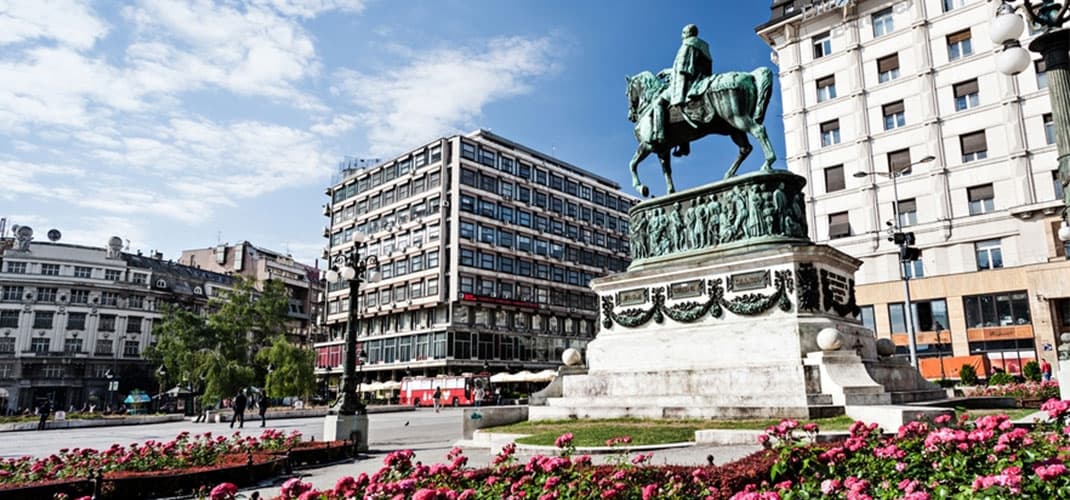
Belgrade, the capital of Serbia, is located at the junction of the Danube and Sava rivers. It has an eclectic mix of old and new styles, from 19th Century buildings to Art Nouveau. The imposing Kalemegdan Fortress is situated in Kalemegdan Park, which is also home to the Military Museum, housing the remnants of a US stealth bomber. Besides the fortress, there are some colourful Orthodox churches and quaint squares, as well as the island of Ada Ciganlija, or ‘Gypsy Island’, to the south of Belgrade.
Located on the outskirts of Belgrade, Vinca has an important place in Serbian history as home to the archaeological site of Belo brdo, meaning ‘White Hill’. The area was made famous by the archaeological finds uncovered in Vinca, many made of stone or bone, including statues, ornaments and drinking vessels. Visitors can tour the site as well as the museum, which showcases examples of Neolithic culture said to date from 5,000 to 4,000 BC. Vinca is also a popular stopping point for Danube river cruises and is famous for its fish restaurants.
Novi Sad is the capital of Vojvodina Province and a main tourist destination. The city is famous for the dominating Petrovaradin Fortress, which dates back to the 17th Century. The picturesque Varadin Bridge spans the Danube, and this is where you can hop on a river cruise. For those who are more into the history and culture of the city, an excursion to the Stari Grad area of the city is a must. Here you will find war memorials, art galleries and museums, as well as some great cafés and bars.
Niš is known for being a university town, the third-largest city in Serbia and also the birthplace of the Roman Emperor Constantine. As such, there is a relaxed and fun-loving vibe to the city, as well as a number of attractions of historical importance, including the Memorial of Constantine the Great, proudly showcased in the city centre. Niš Fortress, built in the 18th Century, is surrounded by rows of cafés that are enjoyed by the student population.
The Zlatar Mountain Range, capped by its highest peak, Golo brdo, is an area full of meadows, lakes and forests and, due to its elevation and fresh air, has become an unofficial spa location for those wishing to relax. During the colder months, those who enjoy winter sports can indulge in skiing on the many slopes accessible via a dedicated ski lift that provides stunning views over the lush valleys below. Other fun things to do include rafting, boating and fishing.
Fruška Gora Mountain is affectionately known as the ‘Jewel of Serbia’. This mountainous region includes a protected area known as Fruška Gora Park and is studded with vineyards and wineries. There is plenty to do in the region, including picnicking, hiking and climbing; however, the biggest drawcard would have to be the Orthodox monasteries scattered all over the countryside, some dating back to the 12th Century.
Sokobanja is another well-known spa town where locals and celebrities gather to enjoy the thermal waters that are said to have deeply healing properties. As well as the hot springs, visitors can also enjoy the crisp air, said to be high in negative ions and free from air pollution due to the increased elevation.
For all those who are winter sports enthusiasts, the Kopaonik Mountain Range is where it all happens. Here you can hit the slopes, whatever your level of ability or experience. There are twenty-four ski lifts servicing the area, and categories of slopes for all levels to choose from, as well as skiing and snowboarding available at the Kopaonik Ski Resort.
Mokra Gora is a lush valley with a spectacular landscape. The village has been restored to resemble its original state from days gone by. While here, take a train ride through the Mokra Gora Valley from the famous railway station. The rail track is shaped in a figure eight, so it neatly loops back to Mokra Gora at the end of the trip.
Close to Mokra Gora, you will find the quaint village of Sirogojno, which features an open-air museum, or ‘ethnic village’, that includes period timber structures such as a traditional Serbian dairy, an inn and a bakery. Locals are on hand to demonstrate traditional arts and crafts from the region. Sirogojno is also an excellent place to taste the local food and drink, with traditional Serbian dishes prepared from recipes that have been handed down over centuries. If you’re game, you must try a glass or two of the local ‘rakija’, a Serbian brandy.
For something a little different, don’t miss another sight in the Mokra Gora Valley: Drvengrad, or ‘Timber Town’. The village was originally built as a film set by local director Emir Kusturica for the film ‘Life Is a Miracle’, and it is now a fully functioning ethnic open-air museum. With a passionate dedication to the arts, there are film festivals, music concerts, art classes and workshops held at Drvengrad throughout the year.
For those who enjoy a little adrenalin rush, head to the west of Serbia to explore its wealth of majestic scenery and extreme sports options. One of these is on the Drina River, a great location for those who want to go white-water rafting.
April–June and September–October
Start Planning Today
Our European travel specialists are ready to design the perfect itinerary for you: whether it's your first time or your fifteenth.
Mon–Fri 09:00am–17:00pm AEST · No obligation · Free expert advice

Zagreb, Ljubljana, Bled, Postojna, Opatija, Plitvice, Split, Dubrovnik, Mostar, Sarajevo, Belgrade
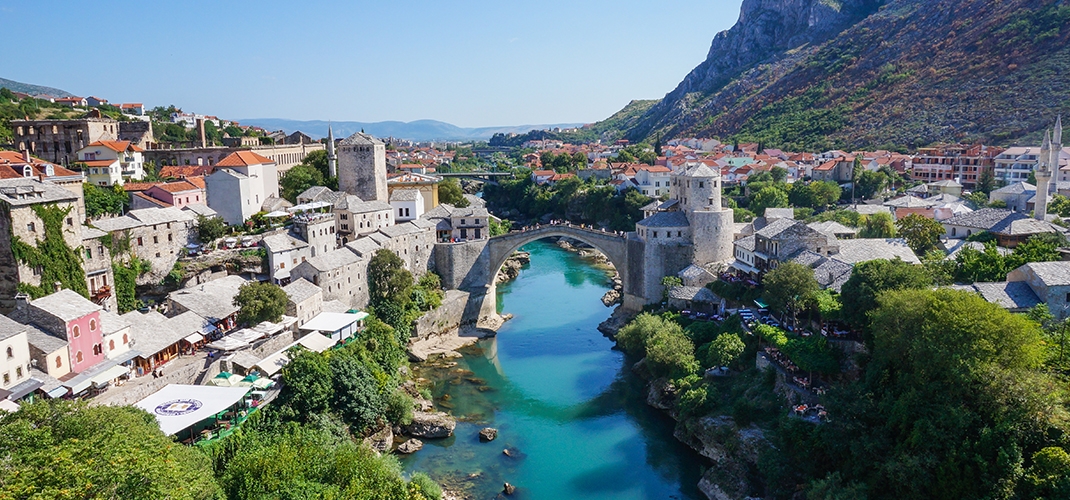
Athens, Delphi, Meteora, Kalambaka, Ohrid, Tirana, Shkodër, Budva, Kotor, Dubrovnik, Mostar, Sarajevo, Split, Plitvice, Ljubljana, Maribor, Budapest, Novi Sad, Belgrade, Niš, Sofia, Thessaloniki, Kamena Vourla, Athens